When Does a Cesspool Need Pumping
Most households should not wait for wastewater to back up before arranging service. A common maintenance interval is about three to five years, but occupancy, water use, system size, soil absorption, and earlier service history can shorten or extend that period. A small system serving a busy household may fill faster than a larger system under lighter use.
Warning signs include several slow drains at once, toilets that gurgle when a washer empties, sewage odors outside, soft ground over the disposal area, or a recent pump-out that did not last. One slow sink is often a fixture or branch-line clog. When symptoms appear throughout the house, the restriction may be in the main line or at the cesspool.
Pumping is also commonly requested before a property sale or when an inspection requires the system to be opened and evaluated. The exact scope should be agreed on first because a routine pump-out and a transaction inspection do not produce the same findings or paperwork. Our broader cesspool and septic services page explains the difference between pumping, diagnosis, repair, and replacement work.
What We Check First
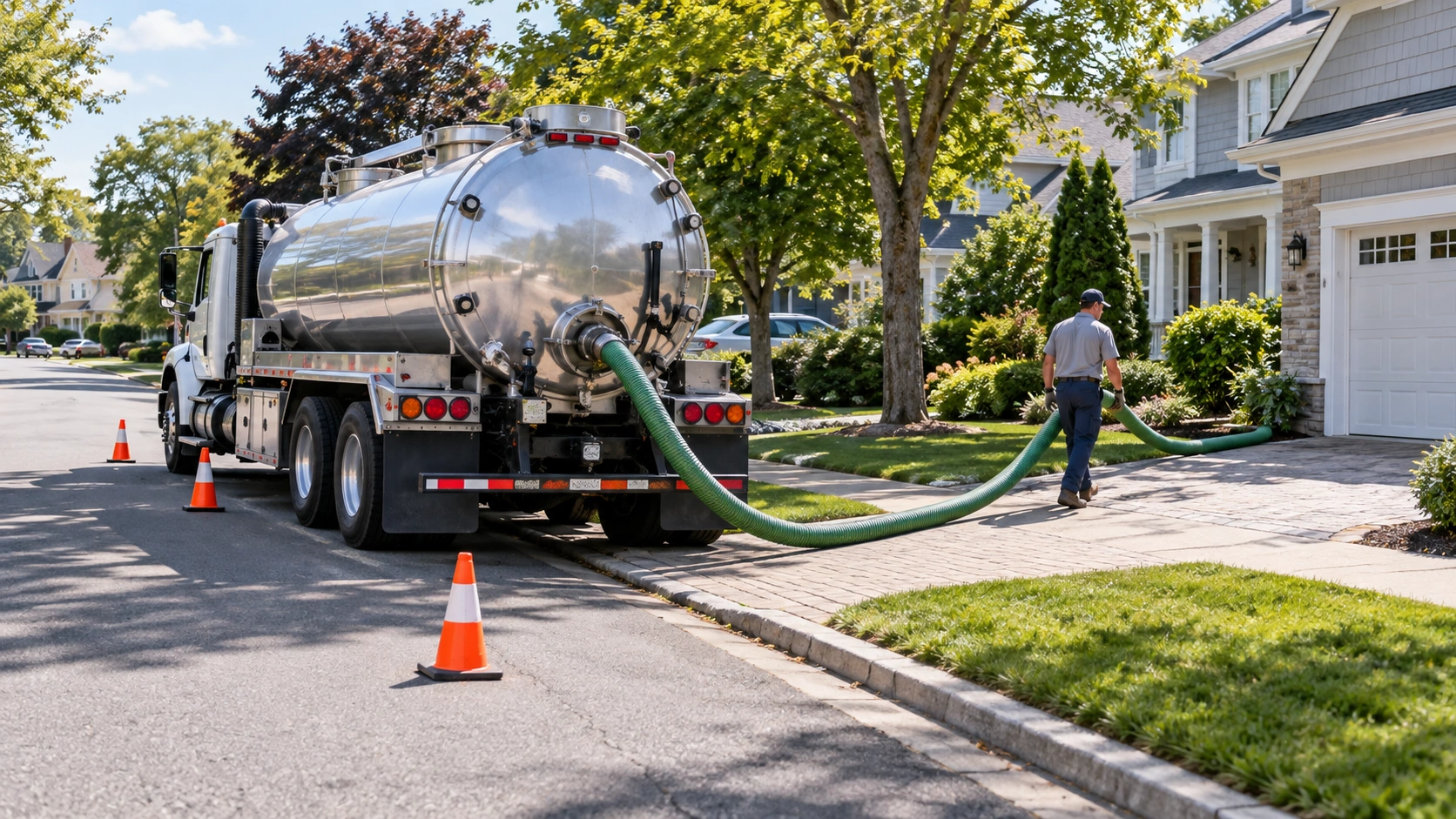
We start by asking which fixtures are affected, when the symptoms began, and when the system was last pumped. We then identify the likely system location and check whether wastewater is reaching it. This separates a full cesspool from a blocked or damaged house connection, which can cause similar symptoms but requires different work.
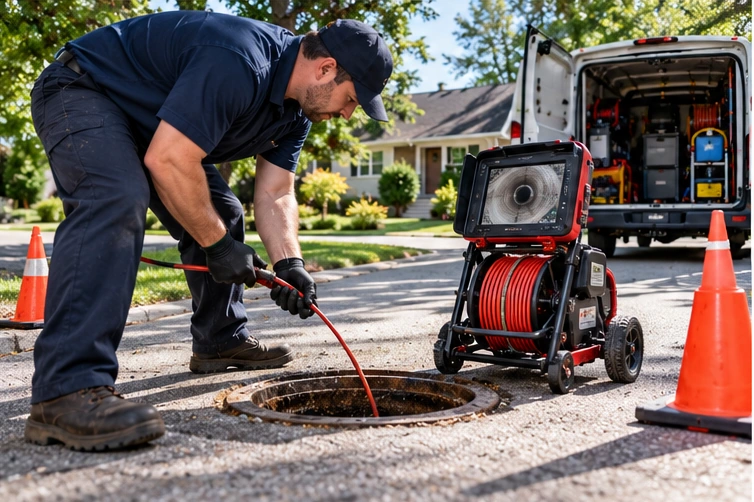
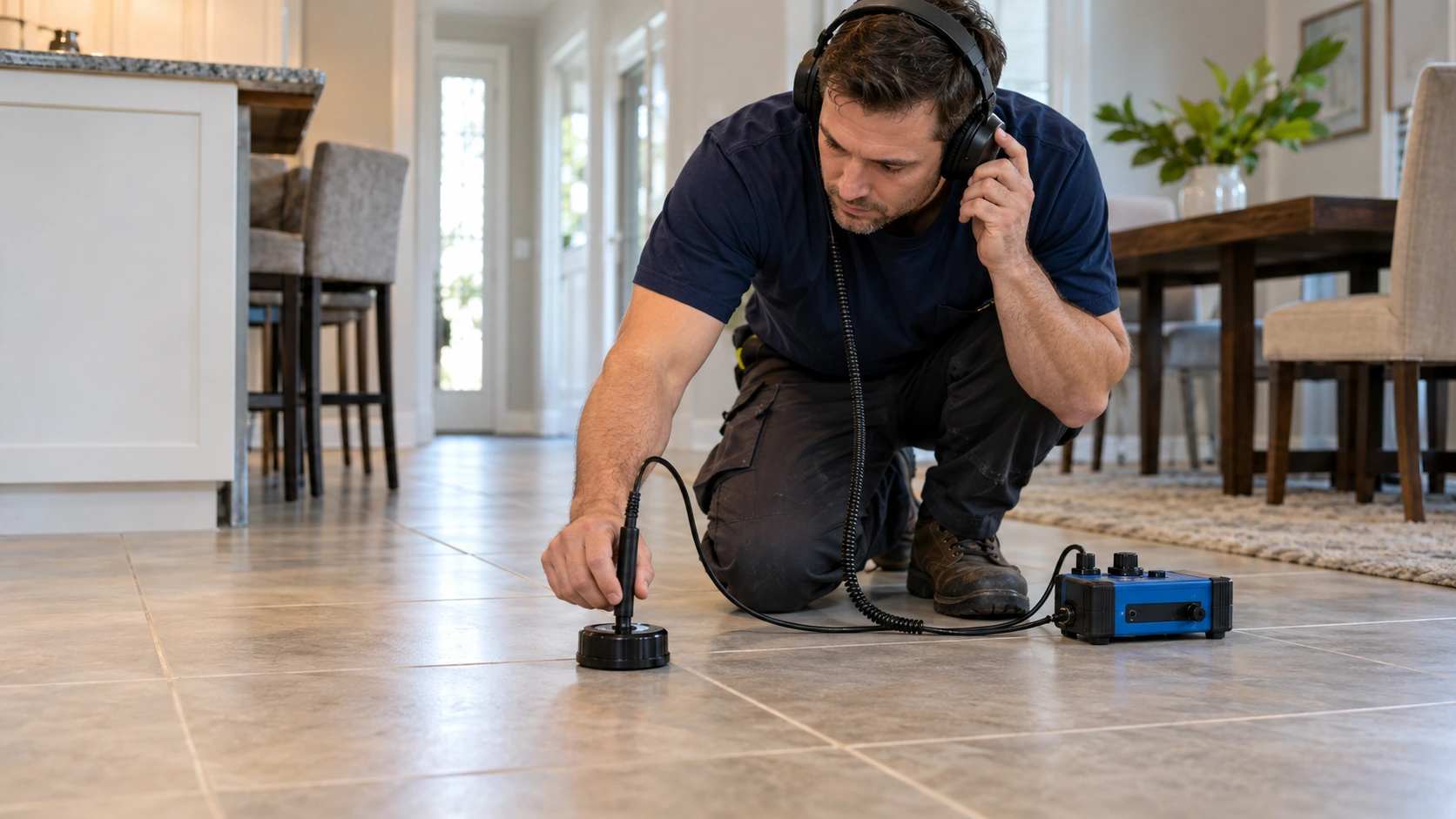
Access is not always visible. On established lots in North Massapequa, a cover may sit below lawn, paving, a patio edge, or landscaping installed by a previous owner. We use available records and field observations, then locate the structure with appropriate equipment when its position is uncertain. This limits unnecessary disturbance and helps us choose a safe access point.
Conditions can also change after prolonged rain. Properties closer to South Oyster Bay, including parts of Nassau Shores and Biltmore Shores, may experience temporary absorption slowdown when surrounding soil is saturated. That does not prove the system has failed. Liquid level, refill rate, inlet flow, and recent water use must be considered together.
How Do We Locate and Pump a Cesspool
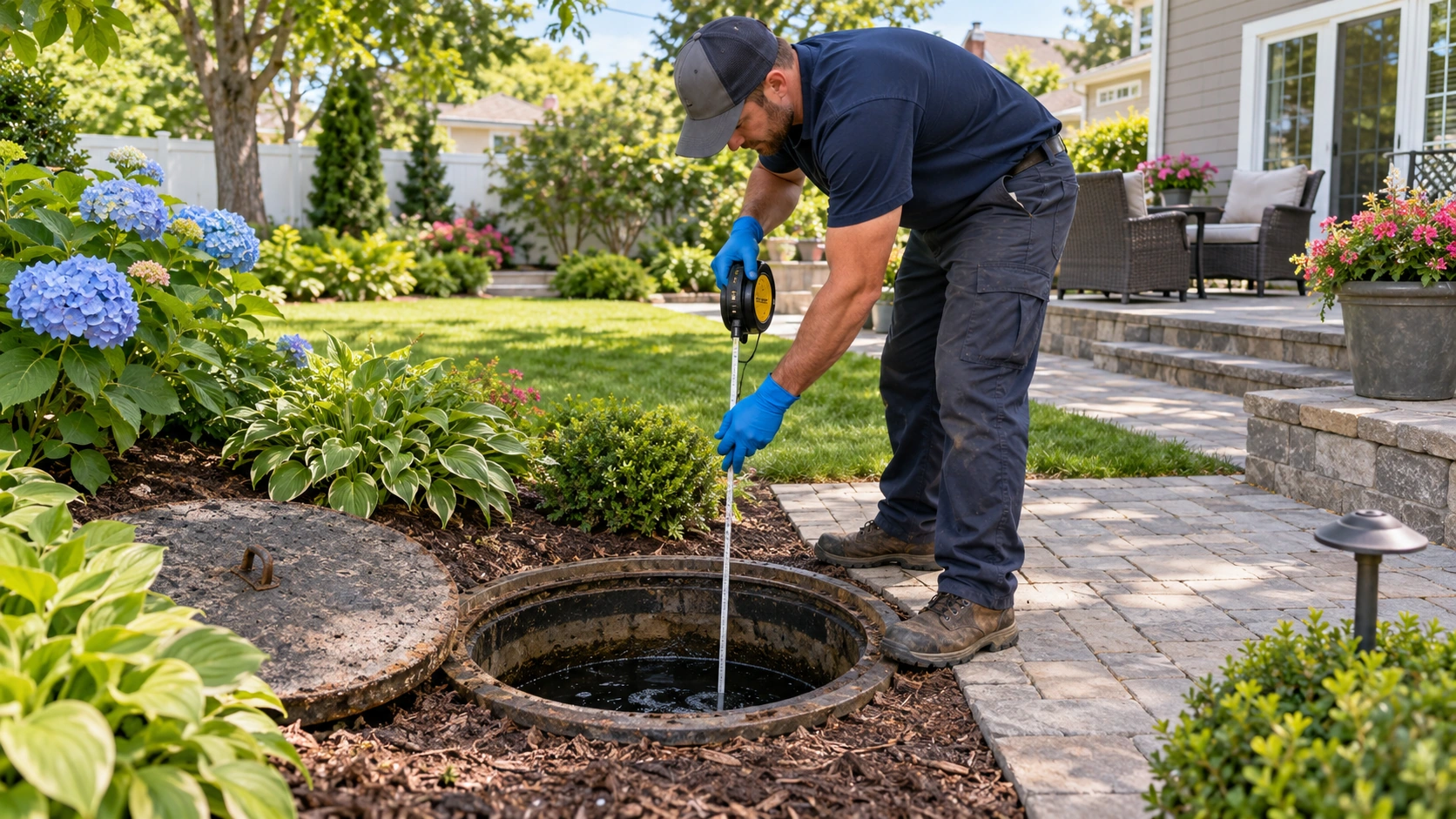
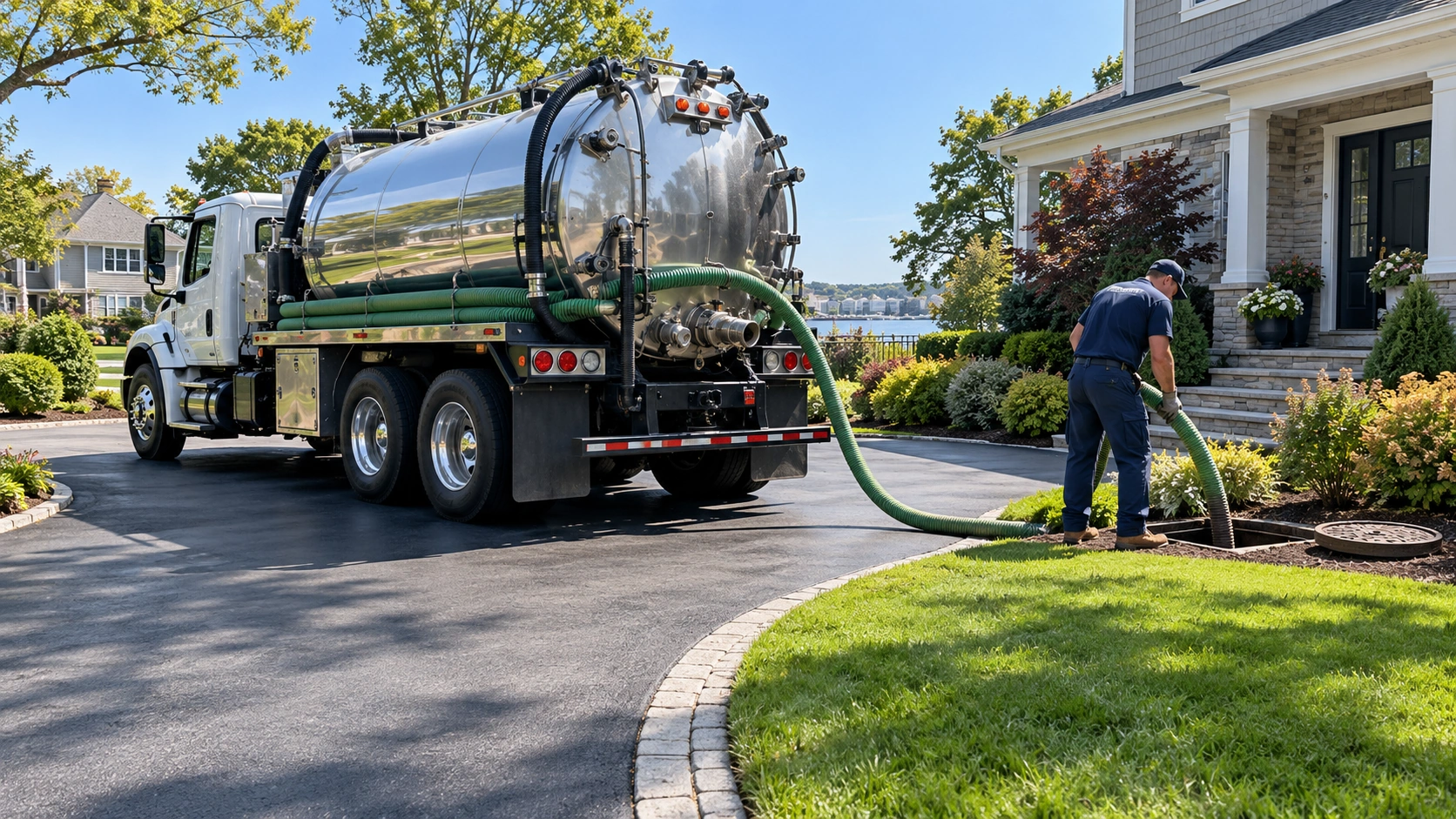
After locating the structure, we expose the service opening without treating a thin or damaged cover as a safe work surface. Vacuum equipment removes liquid, sludge, and floating material. The technician observes the contents and watches how the system behaves during pumping, including whether liquid returns quickly from an overflow pool, the house line, or surrounding groundwater.
Once the level is lowered, we inspect accessible areas of the structure, inlet, and cover. We note visible deterioration, a blocked inlet, excessive solids, or flow that suggests a separate line problem. A controlled flow check can confirm whether wastewater travels from the building to the cesspool after service. Pumping restores capacity; it does not repair a broken line or failed absorption area.
The removed waste is transported for disposal at an authorized facility. We provide a service record for the owner, including disposal documentation when applicable. If the visit is tied to a sale, permit, or other requirement, our septic tank inspection and Nassau County compliance service can address the defined inspection and record needs separately.
What Does Cesspool Pumping Cost
A standard residential pump-out on Long Island commonly falls around $200 to $600. Final pricing depends on system size, depth, access, the amount and type of material, how close the truck can park, and whether more than one pool must be serviced. Locating or excavating a buried cover and after-hours response can add cost.
Line clearing, camera inspection, aeration, repairs, contaminated cleanup, and replacement work are separate from basic pumping. Massapequa Plumbing Experts confirms the planned scope and explains the price or applicable estimate before work begins. If site conditions reveal a different problem, we pause and discuss the evidence rather than adding unapproved work.
Why Choose a Licensed Local Plumber
Massapequa Plumbing Experts brings 10 years of plumbing experience to drainage and onsite-wastewater problems. That experience matters when a full cesspool, blocked building sewer, damaged connection, and poor absorption produce similar symptoms. We look at the flow path as a whole and explain whether pumping is routine maintenance, an immediate relief step, or only part of a repair.
Our work is documented, the service area is left orderly, and owners receive practical guidance based on the system's observed condition. For help with related water, sewer, and fixture problems, visit our Massapequa plumber homepage for the full service overview.
Frequently Asked Questions
How do I know when my cesspool needs pumping?
Slow draining fixtures throughout the house, gurgling sounds, or simply reaching the three to five year mark since the last service are the clearest signals.
What happens to the waste after a cesspool is pumped?
It's transported and disposed of at a licensed facility, and we provide documentation of the disposal for your records.
Can you locate my cesspool if I don't know where it is?
Yes, we can locate and access most cesspools using standard equipment even without existing records or a visible cover.