Do You Need a Water Softener
A water softener is designed for hardness minerals, mainly calcium and magnesium. It can reduce scale and improve soap performance, but it is not a universal water filter. Testing should confirm hardness before equipment is selected. Taste, odor, staining, sediment, or a health-related concern may require different testing and treatment.
In Massapequa homes, the effect of hardness can also depend on water-heater temperature, household use, fixture condition, and existing equipment. We test at the property and examine where scale appears. That provides a better basis for sizing than copying a neighbor’s system or choosing the largest unit available.
What Signs Point to Hard Water
Hard water usually reveals itself through repeated mineral buildup rather than a sudden plumbing failure. Common signs include:
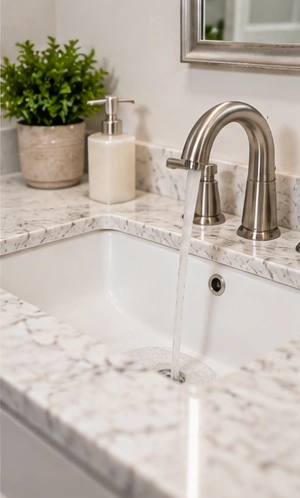
White crust on faucets, showerheads, glass doors, kettles, or humidifier parts.
Soap and shampoo that lather poorly or leave a film.
Dishes and glassware that develop spots after washing.
Scale collecting in aerators, cartridges, dishwasher screens, or water-heating equipment.
An existing softener that uses no salt, regenerates constantly, leaks, or no longer produces soft water.
These signs support testing, but they do not prove that every visible deposit comes from hardness. Iron, sediment, corrosion, and cleaning-product residue can look similar. A hardness result helps determine whether a softener is appropriate and how much treatment capacity the household needs.
What We Check First
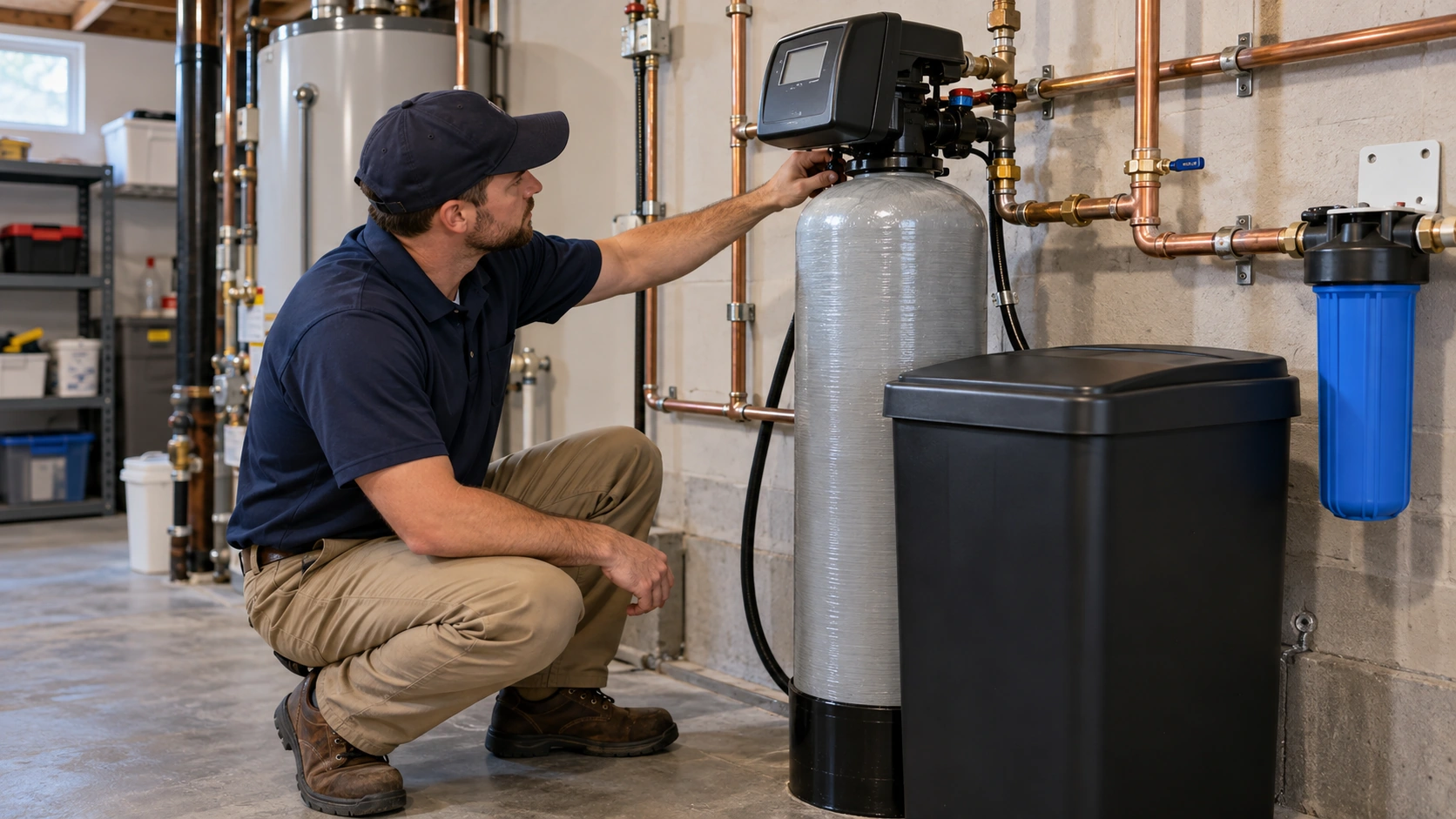
We check the water source, hardness level, pressure, flow, household occupancy, peak demand, pipe size, available floor space, nearby drain, electrical access, and the condition of the main shutoff. We also look for an existing loop, bypass, filter, pressure regulator, or treatment system that affects the installation layout.
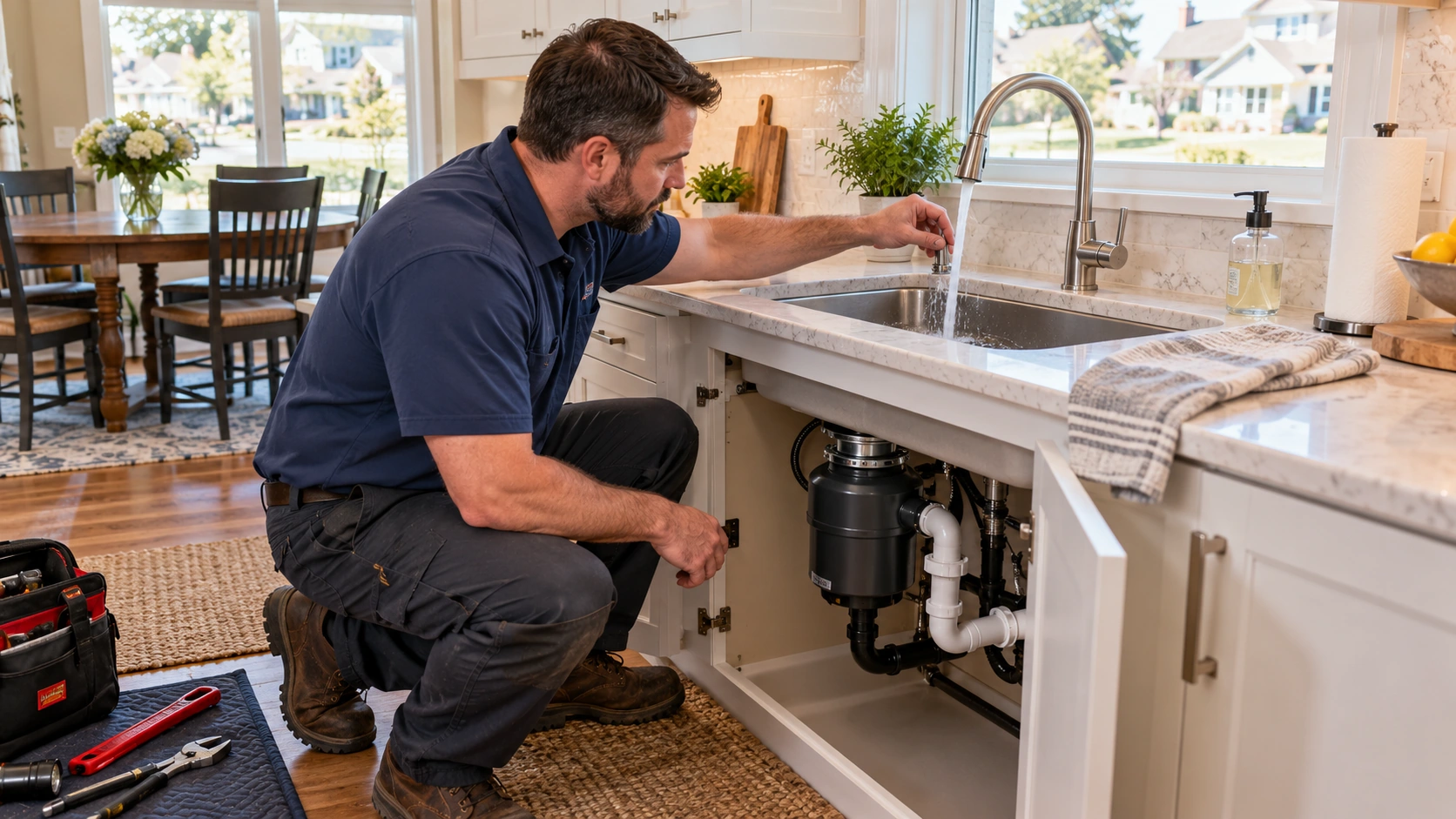
For repair, we inspect the salt level, salt bridge, brine tank, injector, control valve, bypass position, resin performance, drain flow, programming, and signs of leakage. A programming or brine problem may be repairable. A cracked tank, failed control head, exhausted resin, or severely undersized system may make replacement more practical.
How We Size and Install a Water Softener
Sizing starts with measured hardness and estimated daily water use. We calculate the treatment load, then select capacity and regeneration settings that balance reliable output with salt and water efficiency. An oversized unit can regenerate poorly, while an undersized unit may run out of capacity during normal household demand.
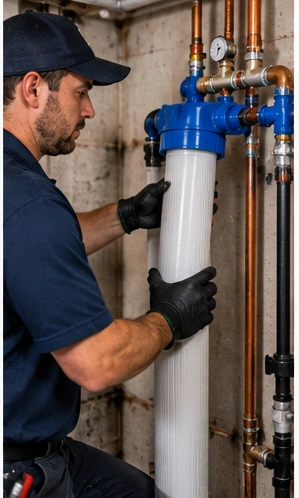
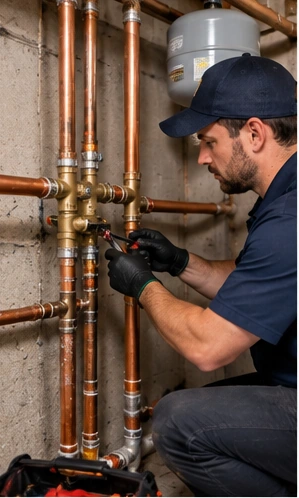
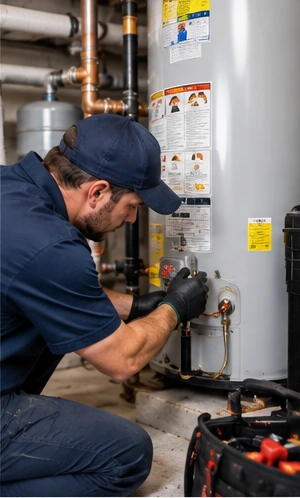
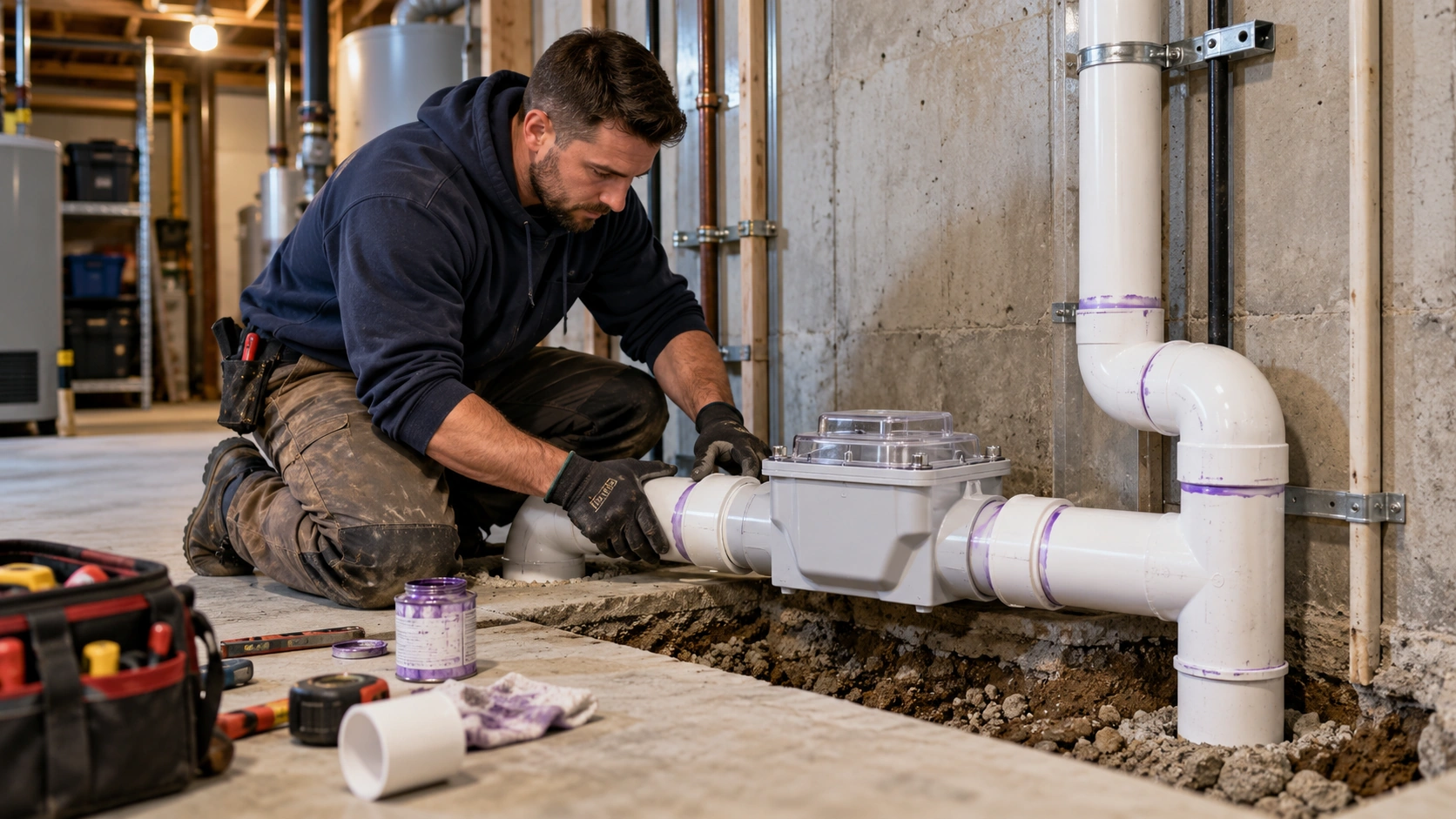
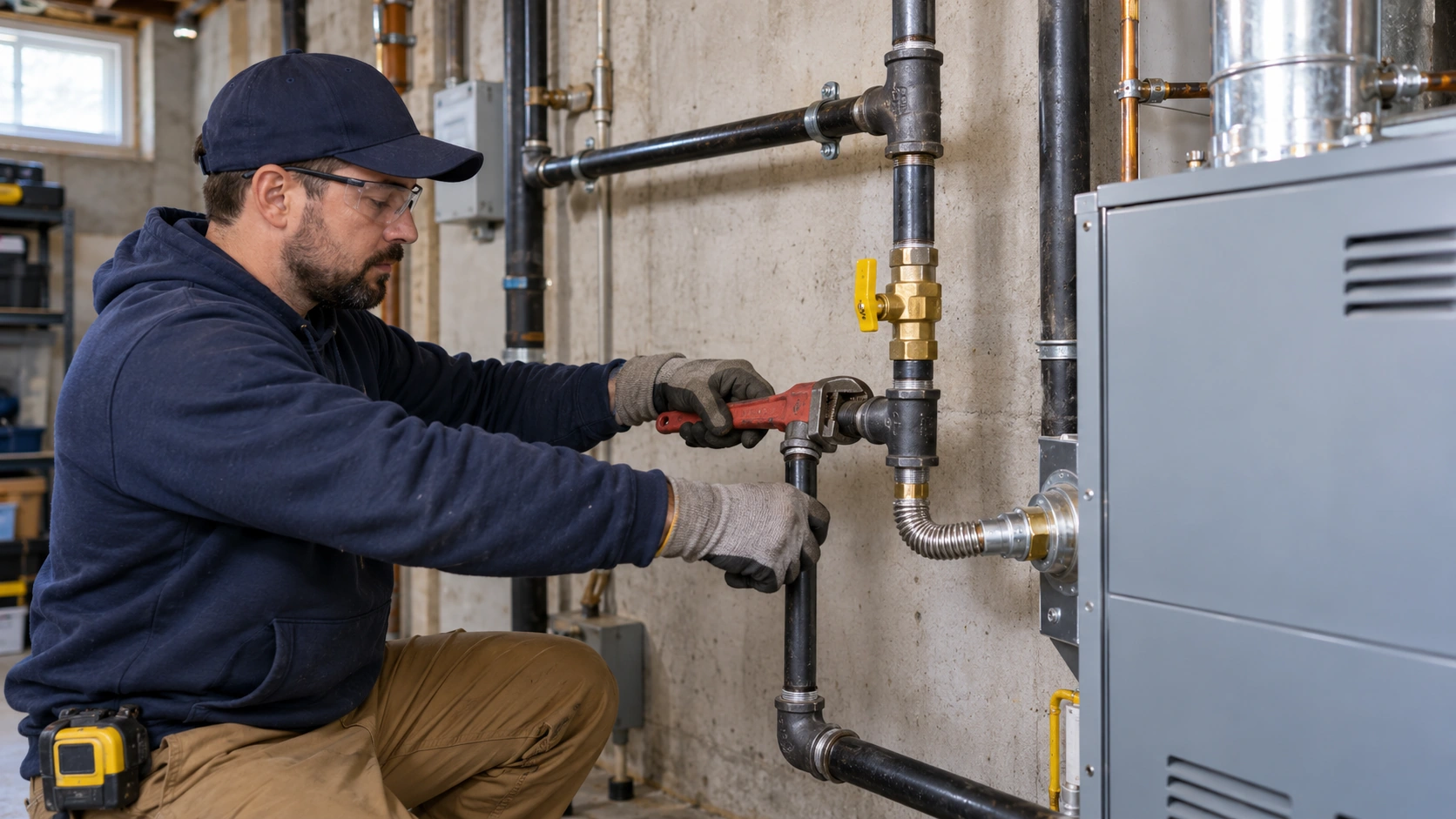
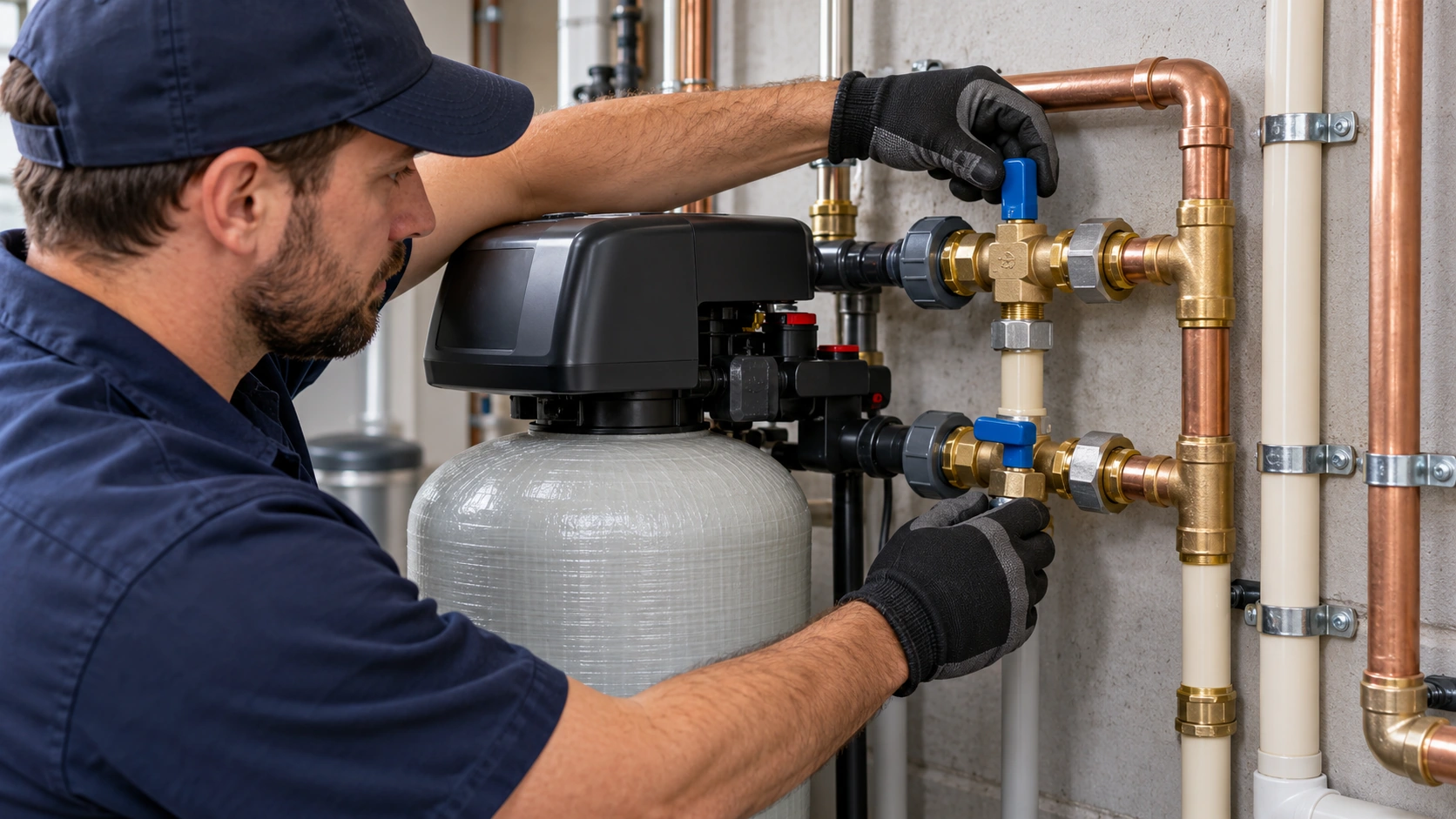
Before installation, we explain the equipment location, bypass arrangement, drain route, power requirement, plumbing changes, and maintenance access. We isolate the supply, connect the unit to the main line, install the bypass and drain components, support the piping, and keep the tanks accessible for salt refills and future service.
After connection, we flush the system, restore pressure gradually, inspect every disturbed joint, program hardness and regeneration settings, and confirm that the brine and drain cycles operate correctly. We test the output rather than assuming that a powered control screen means the system is softening water.
We then explain salt loading, regeneration timing, bypass use, cleaning, warning signs, and what the softener will not remove. The written scope identifies the selected capacity, included plumbing, startup, and any separate filtration or electrical work needed at the property.
How Much Does Water Softener Installation Cost
Water softener pricing depends on hardness, capacity, control type, plumbing access, drain and electrical readiness, and whether old equipment must be removed. These are directional planning ranges, not exact or guaranteed prices:
A standard residential water softener installation may fall around $1,500 to $4,500, depending on size, features, and site conditions.
Repair or control-valve service may fall around $250 to $900, depending on diagnosis, parts, resin condition, and accessibility.
New drain routing, extensive piping changes, difficult access, specialty media, pretreatment, or electrical correction can move the project outside those ranges.
Massapequa Plumbing Experts provides the applicable written price after testing and inspection and before approved work begins. The quote separates the softener, installation, removal, plumbing changes, and additional treatment when needed.
Why Choose a Licensed Local Plumber
Massapequa Plumbing Experts brings 10 years of plumbing experience to hardness testing, softener sizing, installation, repair, and final performance checks. We hold an active Town of Oyster Bay plumber's license for related plumbing work. You receive a clear explanation of the test result, the recommended capacity, ongoing maintenance, and the written installation scope.
Related Water Treatment Services
Water Treatment and Well Water Systems Massapequa explains testing, filtration, reverse osmosis, and well equipment. If the concern involves sediment, taste, or odor rather than hardness alone, see Whole House Water Filtration Massapequa. Visit the Massapequa plumber homepage for other services.
Frequently Asked Questions
How do I know if I actually need a water softener in Massapequa?
A simple hardness test is the clearest way to confirm; visible scale buildup on fixtures and glassware is usually the first sign homeowners notice.
How much does water softener installation cost in Massapequa?
Cost depends on system size and household water usage; we size and quote it based on a real hardness test rather than a generic estimate.
Do water softeners need regular maintenance?
Yes, periodic salt refills and occasional resin bed servicing keep a softener working correctly; we can set up a maintenance schedule during installation.