


What Is Slab Leak Detection
Slab leak detection checks for water escaping from a pressurized pipe below or within a concrete floor. It identifies the affected branch and narrows the likely location without opening large sections of flooring based on guesswork.
This matters in Massapequa properties with slab-on-grade sections, converted garages, or additions where piping is difficult to see. Groundwater, drainage, appliances, and fixture connections can create similar signs, so we test before recommending destructive access.
What Signs Point to a Leak Under the Slab
A slab leak should be considered when water use, floor conditions, and plumbing behavior change without a visible source. Common warning signs include:
An unexplained rise in the water bill or a meter that moves while every fixture is off.
A warm area on a floor that may indicate a leaking hot-water line.
Damp flooring, darkened grout, lifting material, or recurring moisture with no nearby spill.
The sound of running water when faucets, toilets, appliances, and exterior fixtures are off.
Lower pressure, a water heater that cycles more often, or hot water that runs out unusually fast.
Cracking, musty odors, or staining near the floor or base of a wall.
Shut off the main supply if water is actively spreading and the valve can be reached safely. A warm spot alone is not proof; heating ducts and sunlight can also change floor temperature. Meter and pressure-test results matter more than one symptom.
Why Slab Lines Develop Leaks
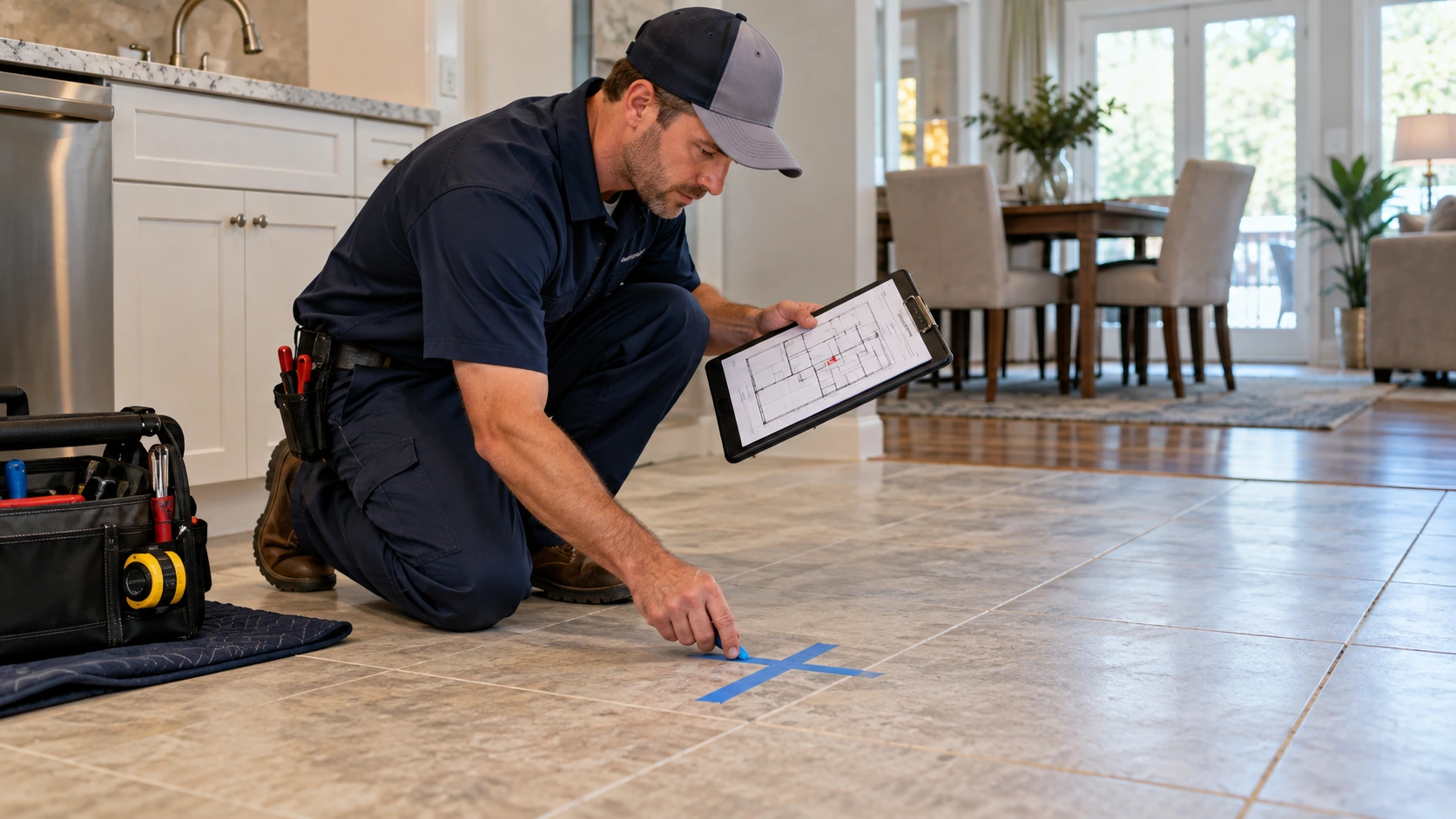
Leaks below concrete can develop from corrosion, installation defects, abrasion, pipe movement, high pressure, or later construction damage. Aging copper may develop pinholes, while galvanized pipe can corrode and restrict internally before it leaks.
Massapequa has postwar houses and later additions, so pipe below one floor may differ from the rest of the building. Near South Oyster Bay, groundwater can also contribute to under-floor moisture. Controlled testing separates those conditions from a pressurized-pipe leak.
What We Check First
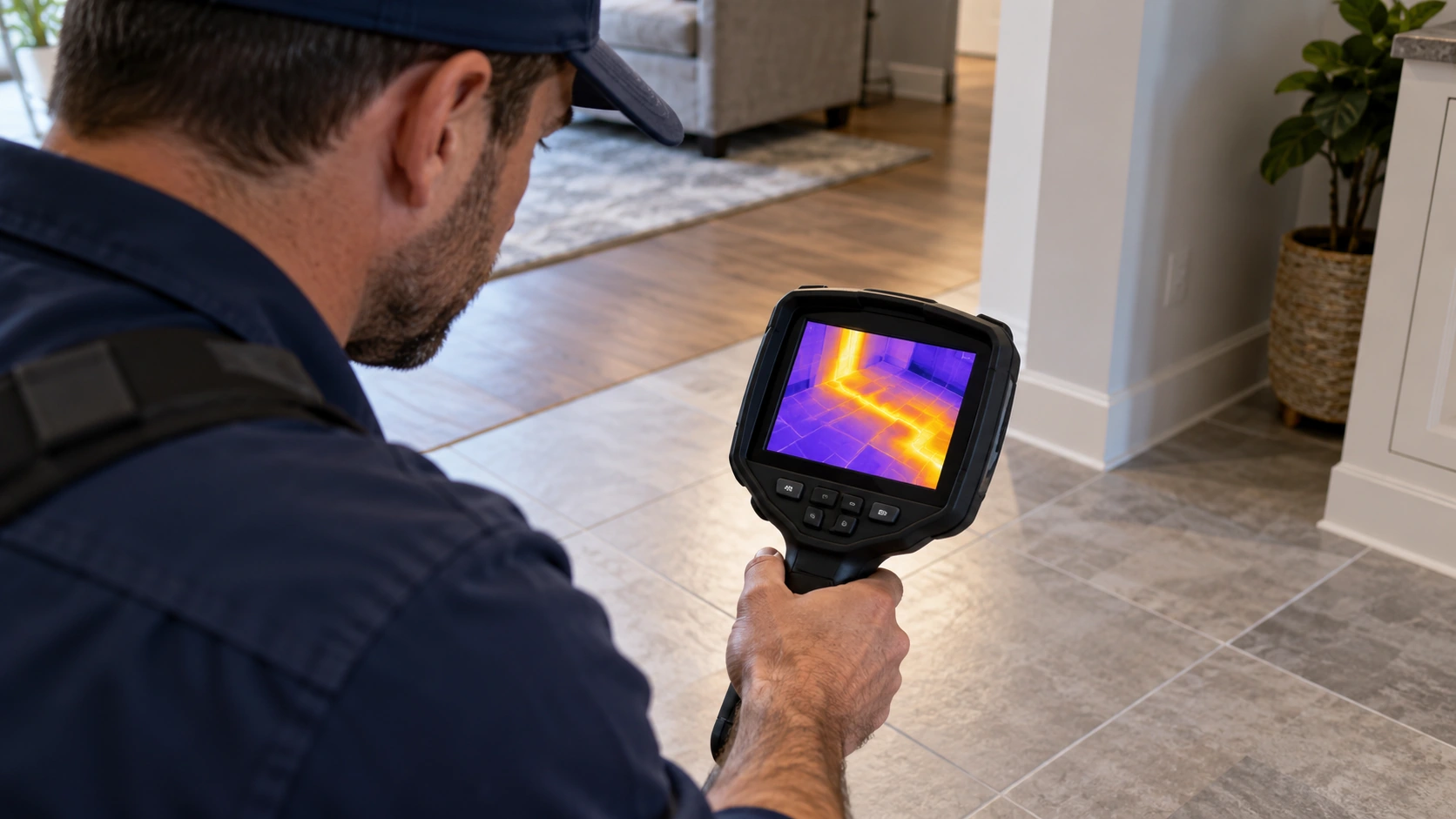
We check the meter, accessible fixtures, mechanical equipment, and simpler above-floor sources. We compare hot and cold behavior, test pressure, review the likely pipe route, and scan for temperature and moisture patterns.
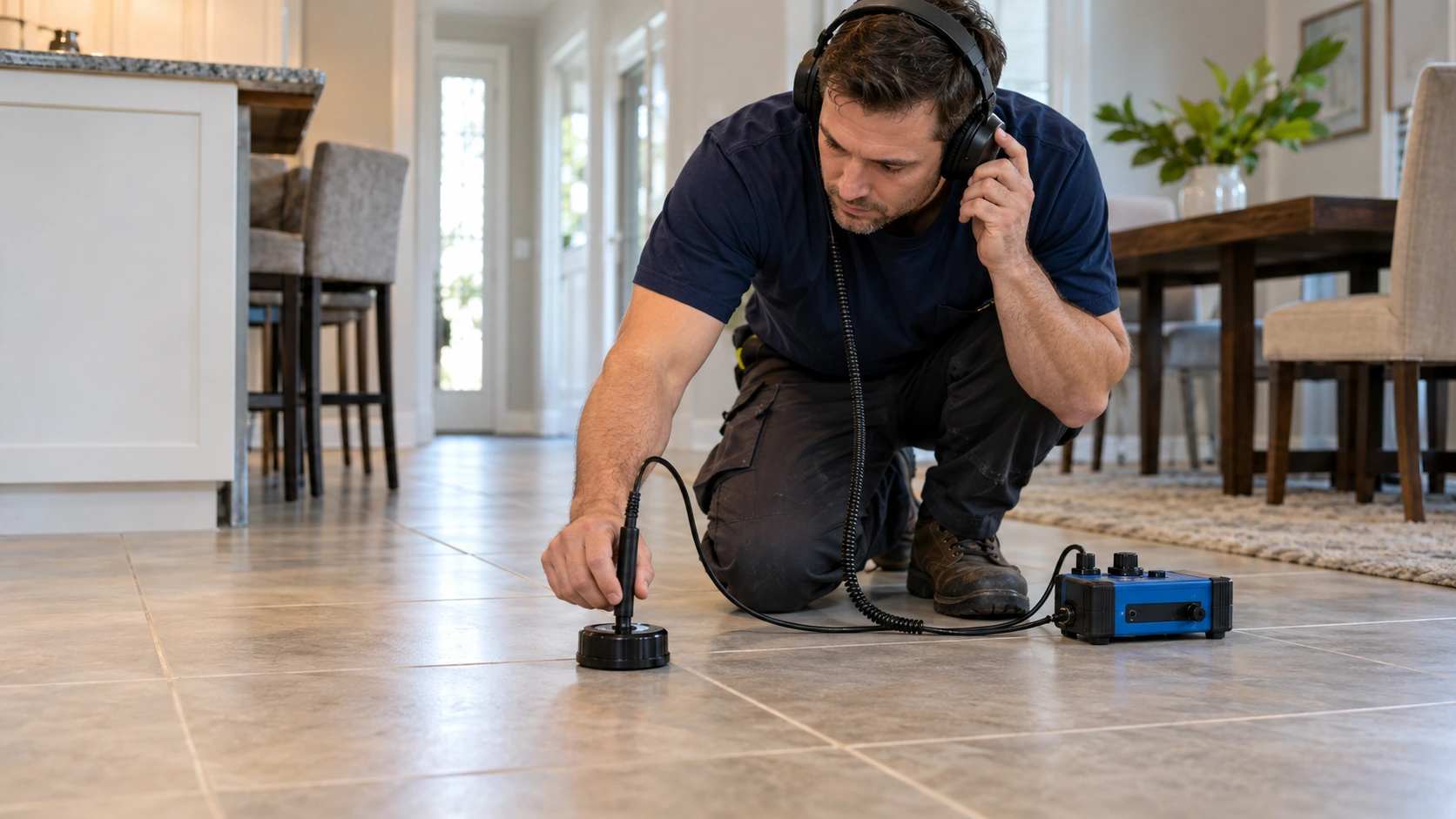
If the evidence supports a concealed supply leak, we isolate branches and use acoustic equipment where conditions allow. Sound can travel through concrete and connected piping, so multiple findings must agree before we mark a proposed access point.
How We Locate and Repair a Slab Leak
First, we verify pressure loss and rule out toilets, appliances, water-heater components, and visible connections. We then isolate the likely line and narrow the leak using acoustic listening, pressure testing, thermal imaging, and moisture readings.
Once the likely location is clear, we explain the repair choices. Direct access may suit one reachable failure. Rerouting the branch through a wall, ceiling, or framed area may avoid cutting the slab when the buried route is deteriorated or difficult to access.
For repair, we protect the work area, isolate the line, and use compatible transitions and supports. Permit and inspection steps depend on scope. We pressure-test the repaired or rerouted line, restore water, operate fixtures, and check for leakage.
The proposal identifies whether concrete, flooring, drywall, or paint restoration is included or assigned to another contractor.
How Much Does Slab Leak Detection and Repair Cost
Slab leak pricing depends on how quickly the affected line can be isolated and whether the solution uses direct access or rerouting. These are directional planning ranges, not exact or guaranteed prices:
Detection and diagnostic work may fall around $250 to $700, depending on property size, access, testing time, and the number of lines that must be isolated.
A slab leak repair or reroute may fall around $1,500 to $6,000 or more, depending on pipe material, leak location, concrete depth, floor finish, route length, permits, and restoration.
Multiple leaks, corrosion, premium flooring, difficult access, after-hours response, and separate finish work can move the total outside those ranges. Massapequa Plumbing Experts provides the applicable written price after diagnosis and before approved repair begins.
Why Choose a Licensed Local Plumber
Massapequa Plumbing Experts brings 10 years of plumbing experience to concealed-leak diagnosis and repair planning. We hold an active Town of Oyster Bay plumber's license for related plumbing work. Our recommendation is based on documented test results, accessible pipe condition, repair history, and the least disruptive dependable route, not on a promise that one tool can see through every floor.
Related Pipe Services
Pipe Repair, Leak Detection & Repiping Massapequa explains repair, partial repiping, and full-system options. If repeated leaks show broader deterioration, review Whole House Repiping Massapequa. Visit the Massapequa plumber homepage for other services.
Frequently Asked Questions
How do you find a leak under a concrete slab without tearing up the whole floor?
We use electronic acoustic and pressure detection equipment to pinpoint the exact leak location before any concrete is opened, which keeps the access point small.
What causes slab leaks in Massapequa homes?
Corrosion on aging copper or galvanized supply lines running under the slab is the most common cause, sometimes accelerated by soil conditions or nearby groundwater.
Is a slab leak an emergency?
It can become one quickly if left unaddressed, since ongoing water intrusion under a slab can undermine the foundation and promote mold; we treat active slab leaks as priority calls.