

What Can Cause Low Pressure or No Water
A loss of flow does not always mean the pump has failed. The water supply depends on the pump, pressure tank, pressure switch, controls, check valves, piping, treatment equipment, and the well itself. Testing these parts in sequence avoids replacing an expensive pump when another component caused the symptom.
Private-well equipment varies by property. A submersible pump sits in the well, while a jet pump is above ground. Well depth, water level, horsepower, access, and household demand affect repair and replacement decisions. We confirm the setup before specifying equipment.
What Signs Need Prompt Attention
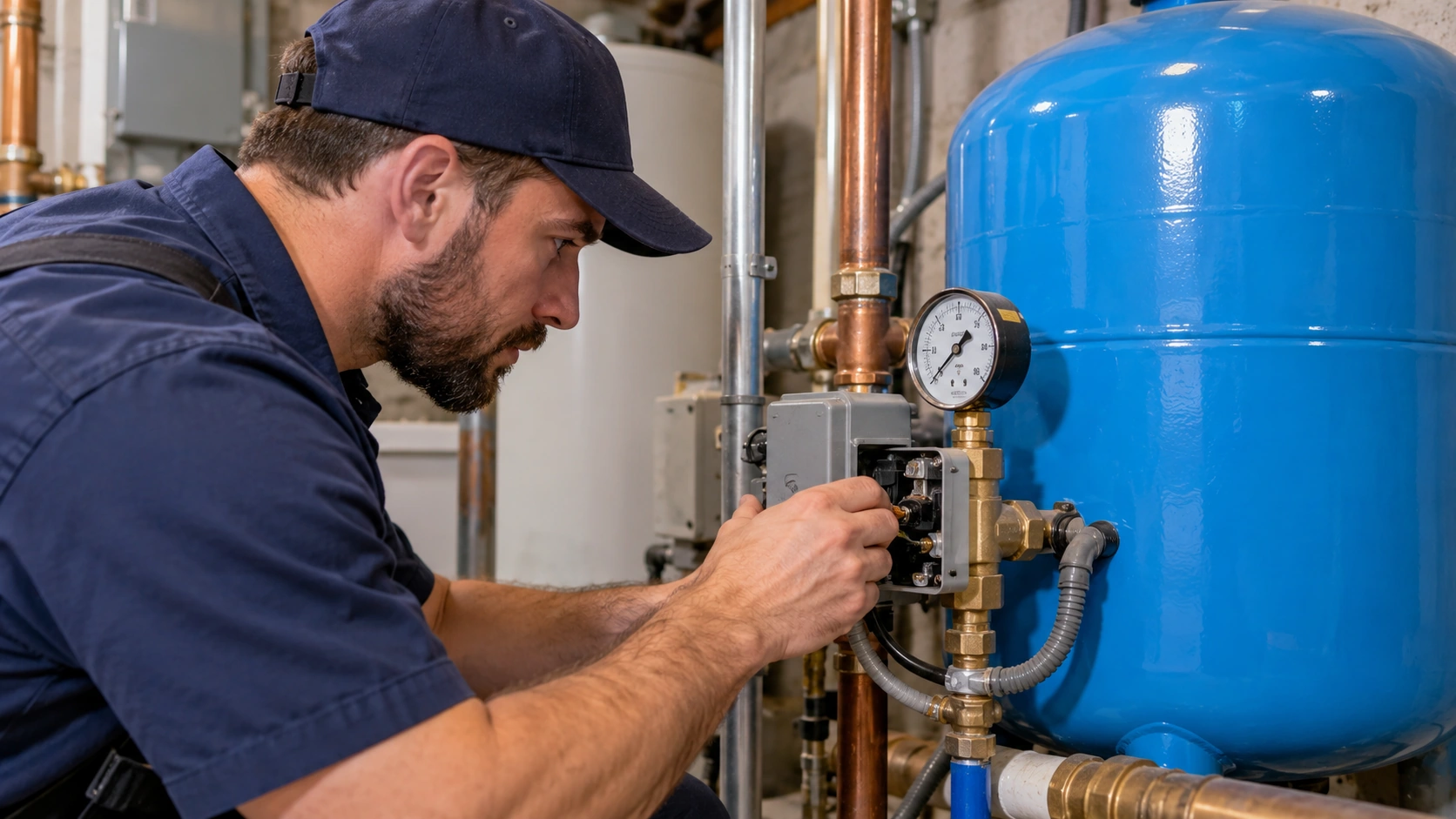
Changes in flow, pressure, noise, or run time should be checked before the pump is damaged further. Common service triggers include:
A sudden total loss of water at every fixture.
Pressure that rises and falls while water is being used.
A pump that runs continuously and does not reach shutoff pressure.
Rapid clicking or short cycling at the pressure switch.
Air, sputtering, sediment, or cloudy water appearing with unstable flow.
A breaker that trips, burned wiring odor, unusual vibration, or new pump noise.
An aging system that cannot maintain pressure when several fixtures operate.
Turn off power to the pump if wiring smells hot, equipment is flooded, the pump runs without producing water, or pressure climbs beyond the expected range. Electrical hazards and dry running can damage equipment. Health-related questions about well water require appropriate sampling and testing, not only a mechanical repair.
What We Check First
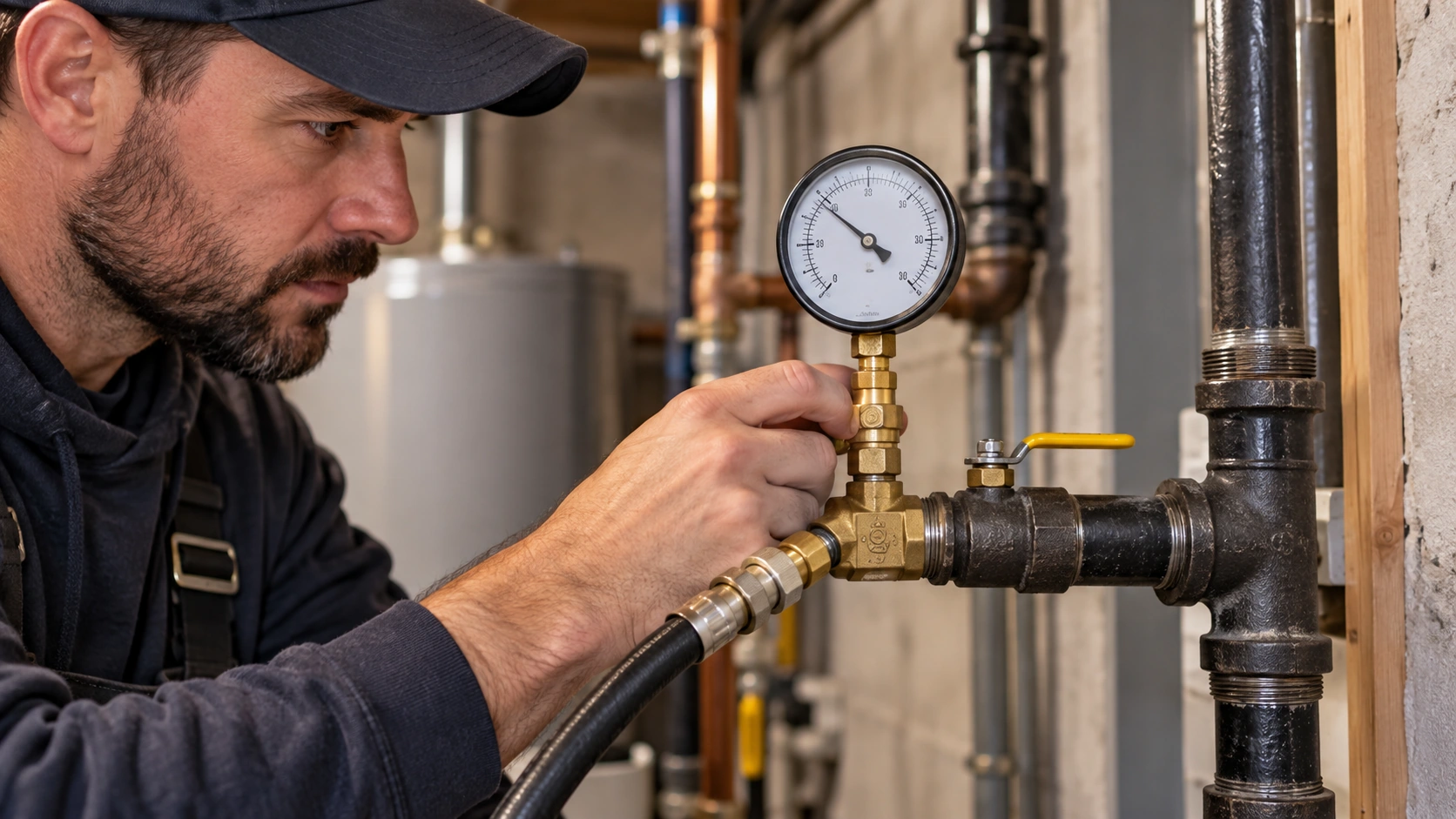
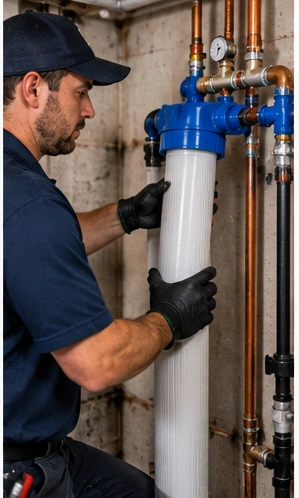
We confirm whether the problem affects the entire property and note any recent power outage, filter change, freeze, leak, flooding, or treatment-system service. We check available voltage information, breaker status, pressure gauge behavior, switch operation, tank response, visible leaks, filter restriction, valves, and pump run time within the plumbing scope.
We also compare cut-in and cut-out behavior, inspect the pressure-tank air charge or signs of waterlogging, and assess whether the well is supplying enough water for the pump. A pump that cycles rapidly may be reacting to a failed tank. A pump that runs continuously may face a leak, low well yield, worn pump, blocked line, or control problem.
How We Repair or Replace a Well Pump
Diagnosis begins by separating electrical, control, pressure, piping, and mechanical causes. Service may involve a pressure switch, gauge, tank, control box, check valve, filter, accessible piping, or pump component. We explain which test points to the failed part and whether repair is dependable for the equipment’s condition and age.
When replacement is required, we document the pump type, depth, horsepower, voltage, pipe and wire arrangement, well access, pressure settings, and household demand. A replacement should match the well’s ability to recover water as well as the building’s flow needs. More horsepower is not automatically better for every well.
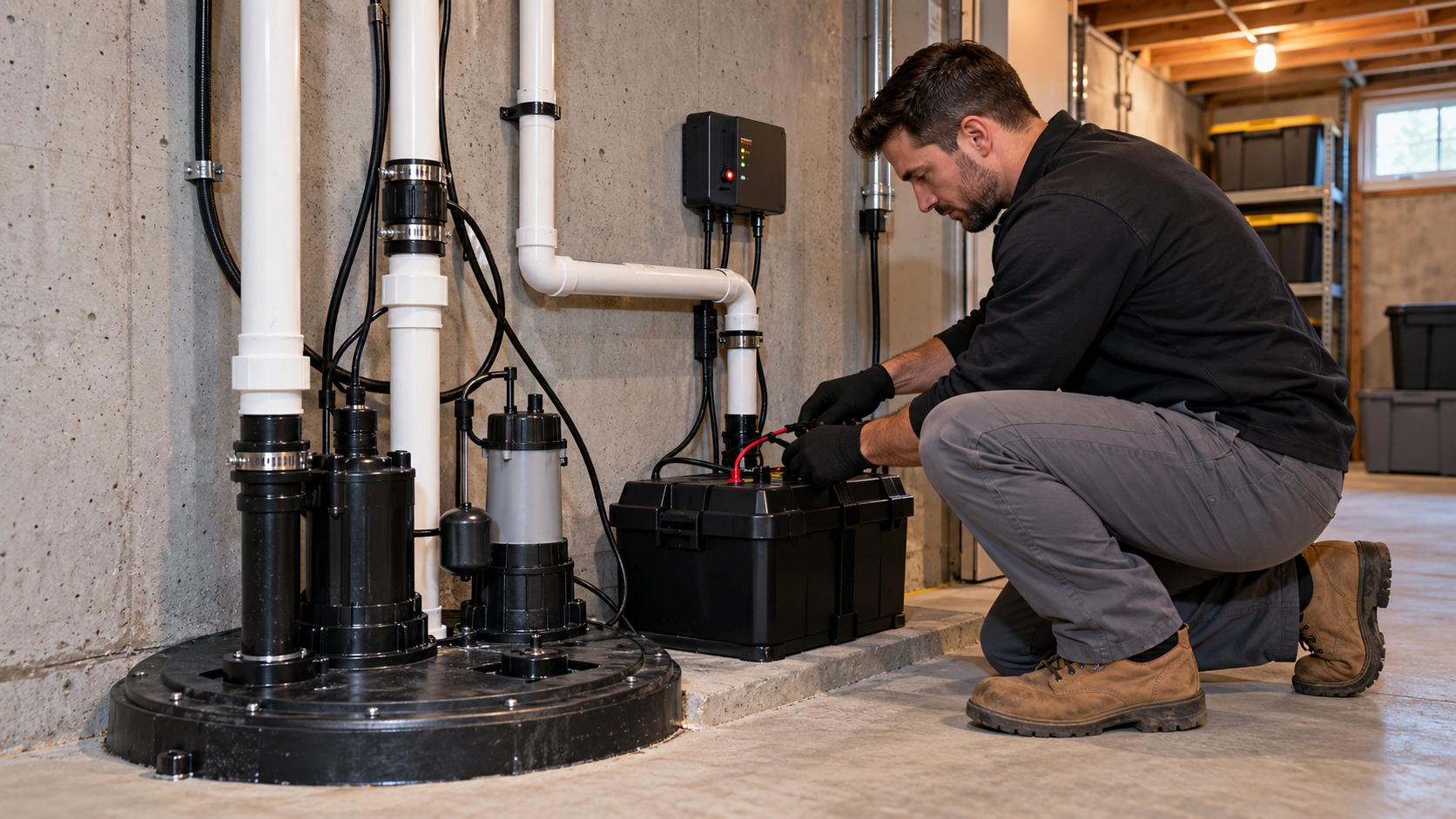
For a submersible pump, removal may involve pulling the drop pipe, wire, safety line, and pump from the well. We inspect accessible components, install compatible equipment, make watertight connections, secure the assembly, and reset the pressure system. Work at the well is performed with clean handling practices appropriate to the system.
After repair or installation, we test pump startup and shutoff, pressure consistency, tank response, flow, leaks, control operation, and recovery under demand. We explain normal cycling, filter maintenance, warning signs, and any recommended water testing. The written scope identifies pump, tank, controls, piping, electrical limitations, and warranty terms that apply.
How Much Does Well Pump Service Cost
Cost depends on the failure, pump type, well depth, horsepower, access, pipe and wire condition, pressure equipment, and whether the pump must be pulled. These are directional planning ranges rather than exact or guaranteed prices:
Pressure-switch, gauge, control, or accessible piping repairs may fall around $300 to $1,200, depending on diagnosis, parts, and access.
Residential well pump replacement may fall around $1,800 to $6,000 or more, depending on depth, pump type, horsepower, wiring, piping, and pressure equipment.
Difficult well access, damaged drop pipe, tank replacement, electrical correction, well rehabilitation, or specialty equipment can move the work outside those ranges.
Massapequa Plumbing Experts provides the applicable written price after inspection and before approved work begins. The quote separates pump work, pressure equipment, piping, electrical limitations, access, and any testing or treatment that is outside the replacement scope.
Why Choose a Licensed Local Plumber
Massapequa Plumbing Experts brings 10 years of plumbing experience to low-pressure diagnosis, well-pump service, tank testing, control checks, and final flow verification. We hold an active Town of Oyster Bay plumber's license for related plumbing work. You receive a clear explanation of the failure and a written scope before work begins.
Related Water and Plumbing Services
Water Treatment and Well Water Systems Massapequa covers testing, filtration, softeners, and well equipment. For hardness and scale concerns, see Water Softener Installation Massapequa. Visit the Massapequa plumber homepage for other services.
Frequently Asked Questions
How do I know if my well pump is failing versus another issue?
Pressure that cycles up and down, a pump that runs constantly, or a sudden total loss of flow are the clearest signs the pump itself needs attention rather than a fixture or filter.
How much does well pump replacement cost?
Cost depends on well depth, pump horsepower, and access; we provide a full quote after inspecting the well and existing pump.
How long does well pump replacement take?
Most residential well pump replacements are completed in a single day, depending on well depth and pump type.