

When Does a Whole House Filter Make Sense
A whole-house filter treats water before it reaches the home’s fixtures. It may be appropriate when a verified issue affects several taps, showers, appliances, or hot and cold water. An under-sink system is usually better when the goal is limited to drinking and cooking water at one faucet.
Filtration must match the test result. Sediment cartridges trap particles. Activated carbon can address certain taste, odor, and disinfectant concerns. Specialized media may target iron or other specific conditions. No single cartridge removes everything, and a filter does not replace a water softener when hardness minerals are the main problem.
What Signs Should Be Investigated
A repeated problem throughout the home is a reason to inspect and test the water path. Common triggers include:
Chlorine-like taste or odor at several cold-water fixtures.
Visible sediment collecting in faucet aerators, appliance screens, or toilet tanks.
Cloudy or discolored water that is not limited to one faucet.
A private-well supply with verified iron, sediment, or another treatment need.
A small point-of-use filter that cannot meet the goal of filtered water at every fixture.
An existing whole-house filter that clogs quickly, leaks, reduces pressure, or has no clear maintenance history.
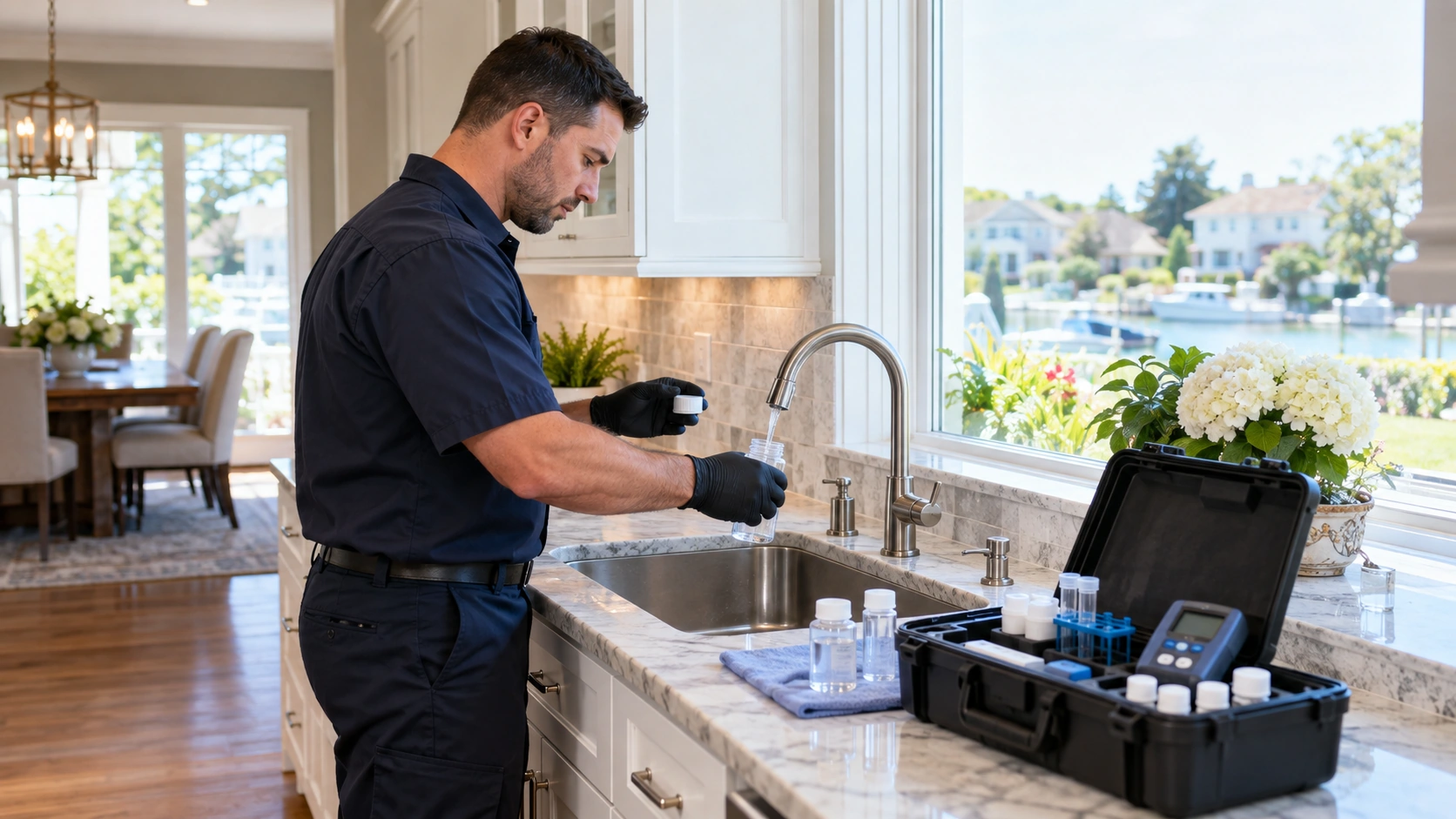
Symptoms do not identify the correct media. Discoloration may involve sediment, iron, corrosion, a water heater, or internal piping. We determine whether the issue affects hot water, cold water, one fixture, or the entire property before specifying equipment.
What We Check First
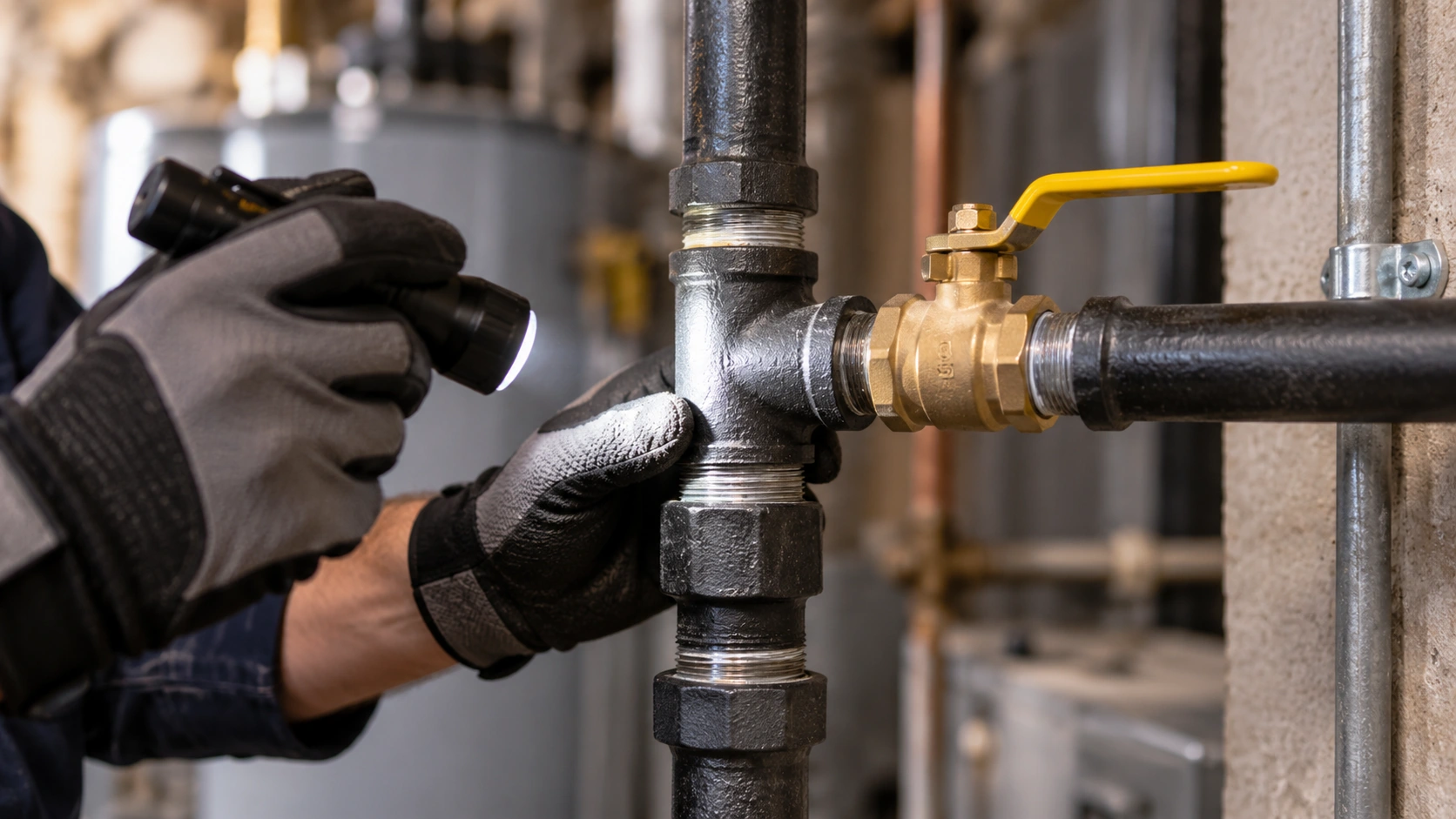
We confirm the water source, complaint, test information, household demand, main-line size, static and flowing pressure, and peak flow. We inspect visible piping, shutoffs, existing treatment, available space, drainage, and access for cartridge or media replacement. A system that fits physically may still be too restrictive for the home’s actual flow.
If an existing filter causes low pressure, we check cartridge condition, housing size, bypass position, pressure loss across the system, valve condition, and whether the media matches the water problem. A clogged cartridge may need service, while repeated rapid clogging can point to an undersized unit or untreated upstream sediment load.
How We Select and Install the Filtration System
First, we use the water test and service goal to select the treatment stage. A basic sediment filter, carbon system, backwashing media tank, or multi-stage arrangement serves different purposes. We explain what the proposed system is expected to reduce, what it will not address, and how performance will be maintained.
Sizing includes the home’s peak flow, pipe diameter, bathroom count, pressure, media service rate, and expected contaminant or sediment load. Proper sizing protects usable pressure when several fixtures operate. We also plan the bypass, gauges or sampling points where appropriate, drain connection for backwashing equipment, and service clearance.
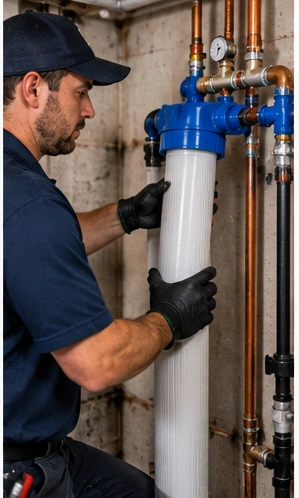
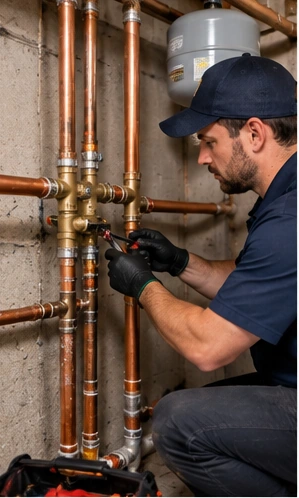
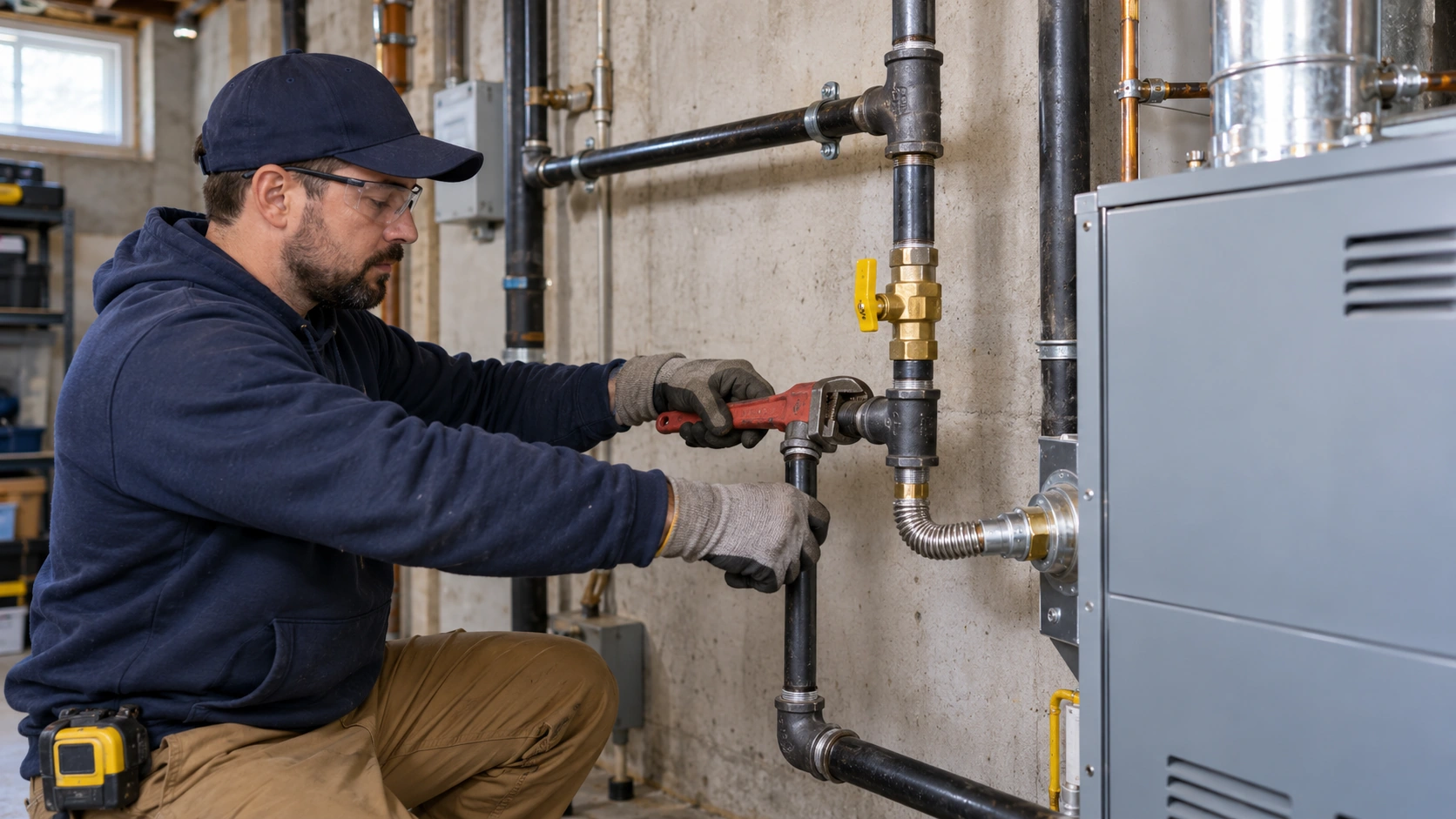
During installation, we isolate the supply, connect at the main line, support the piping and equipment, install the bypass, and complete included drain or electrical connections. We flush the media or cartridges before normal service.
Final checks include leak inspection, bypass operation, pressure and flow under use, and comparison of treated output with the installation goal. We label the cartridge or media schedule and explain shutdown, replacement, sanitizing, and warning signs. The written scope identifies every included treatment stage and any separate work.
How Much Does Whole House Water Filtration Cost
Cost depends on the water test, treatment media, flow requirement, number of stages, piping access, drain and electrical readiness, and maintenance design. These are directional planning ranges rather than exact or guaranteed prices:
A cartridge-based whole-house filtration installation may fall around $1,200 to $3,000, depending on housing size, stages, valves, and plumbing changes.
A backwashing or specialty-media system may fall around $2,500 to $6,000 or more, depending on media, tank size, controls, drainage, and pretreatment.
Difficult access, corroded piping, pressure correction, extensive drain work, testing, or multiple treatment stages can move the project outside those ranges.
Massapequa Plumbing Experts provides the applicable written price after testing and inspection and before approved work begins. We also explain recurring cartridge, media, water, salt, or service costs that apply to the selected system.
Why Choose a Licensed Local Plumber
Massapequa Plumbing Experts brings 10 years of plumbing experience to water testing, flow calculations, filtration installation, leak checks, and pressure verification. We hold an active Town of Oyster Bay plumber's license for related plumbing work. You receive a clear explanation of why each treatment stage is included and the maintenance needed to keep it working.
Related Water Treatment Services
Water Treatment and Well Water Systems Massapequa covers testing, filtration, reverse osmosis, and well equipment. If hardness and scale are the main concerns, see Water Softener Installation Massapequa. Visit the Massapequa plumber homepage for other plumbing services.
Frequently Asked Questions
What's the difference between a whole house filter and an under-sink filter?
A whole house system treats water at the main line so every fixture benefits, while an under-sink unit only treats water at that one tap, typically for drinking and cooking.
Will a whole house filter reduce my water pressure?
A properly sized system shouldn't cause a noticeable pressure drop; we size filtration to your home's actual flow rate to avoid that issue.
How often do whole house filter cartridges need changing?
It depends on usage and what's being filtered, typically every few months to a year; we set a maintenance schedule specific to your system.